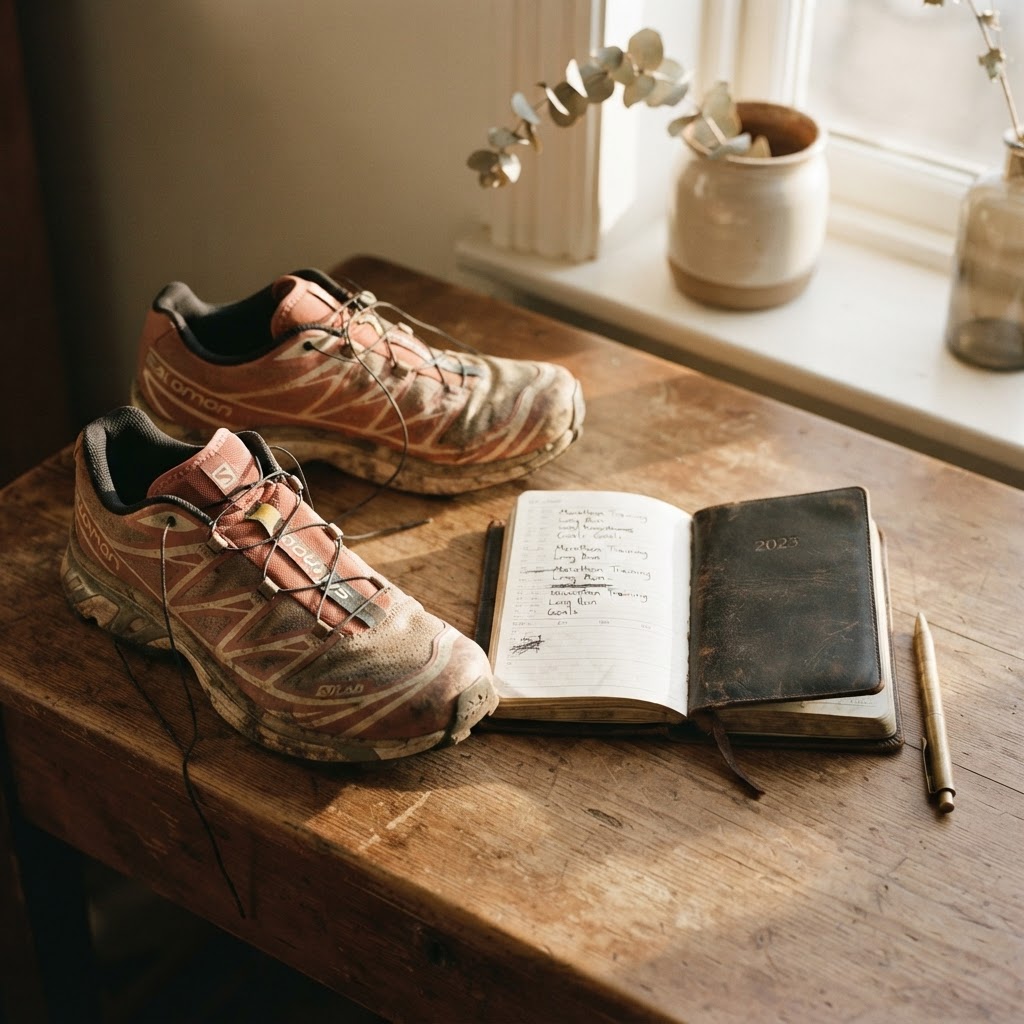
"Just stay active." "Try to move more." It is advice you have heard from nearly every doctor, every wellness article, every well-meaning friend, and it is not wrong, exactly. It is just useless in a way nobody bothers to explain. Staying generally active is good for your heart, your mood, and your general sense of wellbeing. It is not going to protect the two things menopause puts at the most direct risk: your muscles and your bones. Protecting those takes something more specific than "move more," and most women are never told what that actually looks like.
What Is Actually Happening to Your Body
Declining estrogen does two separate things simultaneously, and both are largely invisible until they are not. It accelerates the loss of skeletal muscle mass and strength, a process called sarcopenia, and independently, it accelerates the loss of bone density. Sarcopenia is to muscle what osteoporosis is to bone: related, but distinct conditions, and menopause puts you at accelerated risk of both at once. Neither shows up on a bathroom scale. Neither necessarily shows up in how you feel day to day. Many women, including entirely athletic, health-conscious women with a lifetime of clean lab results, discover the bone loss only when a DEXA scan finally reveals it, often well after significant density has already gone.
Dr. Doug Lucas, an orthopedic surgeon and bone health specialist, has pointed out that the most rapid bone loss occurs in the first five years after menopause. This is not a slow, someday concern. It is a defined window in which what you do, or do not do, has an outsized and largely permanent effect on your skeletal health for the rest of your life.
Why "Move More" Is Not Specific Enough
Walking is genuinely good for you. It supports cardiovascular health, mood, and general wellbeing, and none of that should be dismissed. But walking, on its own, does not generate the mechanical load your bones and muscles need during this particular transition.
Dr. Stacy Sims, an exercise physiologist and nutrition scientist who has spent her career studying how women's training needs differ from men's, particularly across the menopause transition, has been explicit on this point. Low-intensity walking, while genuinely good for general wellbeing, does not generate the load needed to protect bone density, maintain muscle mass, or support the metabolic and cognitive health of this transition. Her research instead points to three specific categories of movement as the most effective across all of those areas at once:
- Heavy resistance training — lifting genuinely challenging loads, not light weights for high repetitions
- Sprint interval training (SIT) — brief, all-out maximum effort bursts, distinct from the sustained 80 to 90 percent effort of conventional HIIT
- Plyometric exercises — explosive, impact-based movements that place direct mechanical stress on bone
The evidence behind this is not speculative. The LIFTMOR trial, a randomized controlled study of postmenopausal women with low bone mass, found that a program of high-intensity resistance and impact training significantly improved bone density at the spine and hip, and did so safely, in a population many providers still assume should avoid heavy loading altogether. That assumption is outdated, and it may be costing women the exact protection they need most during this five-year window.
The Bigger Picture: Muscle as an Organ, Not Just an Aesthetic
It helps to understand why this matters beyond bone alone. Dr. Gabrielle Lyon, a board-certified physician and researcher in nutritional sciences and geriatrics, calls her approach muscle-centric medicine. Her core point is simple: muscle is not just tissue for strength or appearance. It behaves more like a gland, releasing substances into your bloodstream that help regulate blood sugar and support metabolic health elsewhere in the body. Her research is not menopause-specific, but the underlying principle applies directly to this transition. Preserving muscle mass through resistance training and adequate protein intake is not a vanity project. It is one of the most direct levers available for protecting long-term metabolic and physical health, at exactly the life stage when muscle loss quietly accelerates.
Taken together, Sims' menopause-specific research and Lyon's broader muscle-centric framework arrive at the same conclusion from two different directions: the muscle and bone loss of this transition is not something to simply endure. It is something you can directly intervene on, but the intervention has to be specific.
What This Actually Looks Like in Practice
None of this requires becoming an athlete. It requires being specific about a small number of things:
- Two to three resistance training sessions per week, working with loads challenging enough that the last few repetitions of a set are genuinely difficult. If you can easily do twenty repetitions, the load is very likely too light to generate the stimulus your bones and muscles need.
- Some form of higher-intensity interval or impact work, even briefly. This does not need to mean sprinting outdoors. Short, genuinely maximal efforts on a bike, on stairs, or through bodyweight intervals count.
- Protein distributed across meals rather than concentrated in one, since muscle protein synthesis responds better to steady intake throughout the day than to a single large serving. We cover exactly how much, and what that looks like in practice, in the companion piece on nutrition during menopause.
- Patience with the learning curve. If you have never lifted heavy or trained at high intensity, working with a trainer familiar with menopause-specific programming, even briefly, at the outset is a reasonable and often worthwhile investment.
The Point of All of This
This is not about chasing a particular body composition, and it is not about becoming someone who lives in the gym. It is about recognizing that the vague advice to "stay active" has left an entire generation of women unprepared for a five-year window in which specific, deliberate movement could have meaningfully protected the two systems, muscle and bone, that menopause puts most directly at risk. Nobody warned most women this window existed. Now you know it does.
A Note from Vanne
This is exactly how it happened to me. I was a former ballet dancer, always athletic, always active, with a lifetime of impeccable blood work. Nothing had ever flagged a problem. I had also done some amount of resistance training on and off over thirty years, but for the past decade or so, my focus had shifted almost entirely to yoga. When a DEXA scan finally came back, it showed full-blown osteoporosis. No warning, no early signs, nothing my labs had ever hinted at. Being active was never the problem. Being active in the wrong way, for this specific stage of life, was.
Key Takeaways
- Declining estrogen accelerates both muscle loss (sarcopenia) and bone density loss, often with no visible symptoms until a DEXA scan reveals it
- The most rapid bone loss occurs in the first five years after menopause, making this a defined, high-stakes window rather than a someday concern
- Low-intensity movement like walking does not generate enough mechanical load to protect bone density during this transition
- Heavy resistance training, sprint interval training, and plyometric exercises are specifically evidenced for maintaining bone density and muscle mass during menopause
- The LIFTMOR trial demonstrated that high-intensity resistance and impact training significantly improved bone density in postmenopausal women with low bone mass, and did so safely
- Muscle functions as a metabolically active organ, not just tissue for strength or appearance, making its preservation relevant to long-term metabolic health, not only physical function
Sources and Further Reading
- Watson SL et al. — High-Intensity Resistance and Impact Training Improves Bone Mineral Density and Physical Function in Postmenopausal Women with Osteopenia and Osteoporosis: The LIFTMOR Randomized Controlled Trial · Journal of Bone and Mineral Research, 2018
- Sims ST — Next Level: Your Guide to Kicking Ass, Feeling Great, and Crushing Goals Through Menopause and Beyond · Rodale Books, 2022
- Lucas D — The Osteoporosis Breakthrough · 2023
- Lyon G — Forever Strong: A New, Science-Based Strategy for Aging Well · 2023
This platform is for educational purposes only and does not constitute medical advice. Always consult a qualified healthcare provider regarding your health and treatment options.